The significance of the solar panel tilt angle
08 February 2023
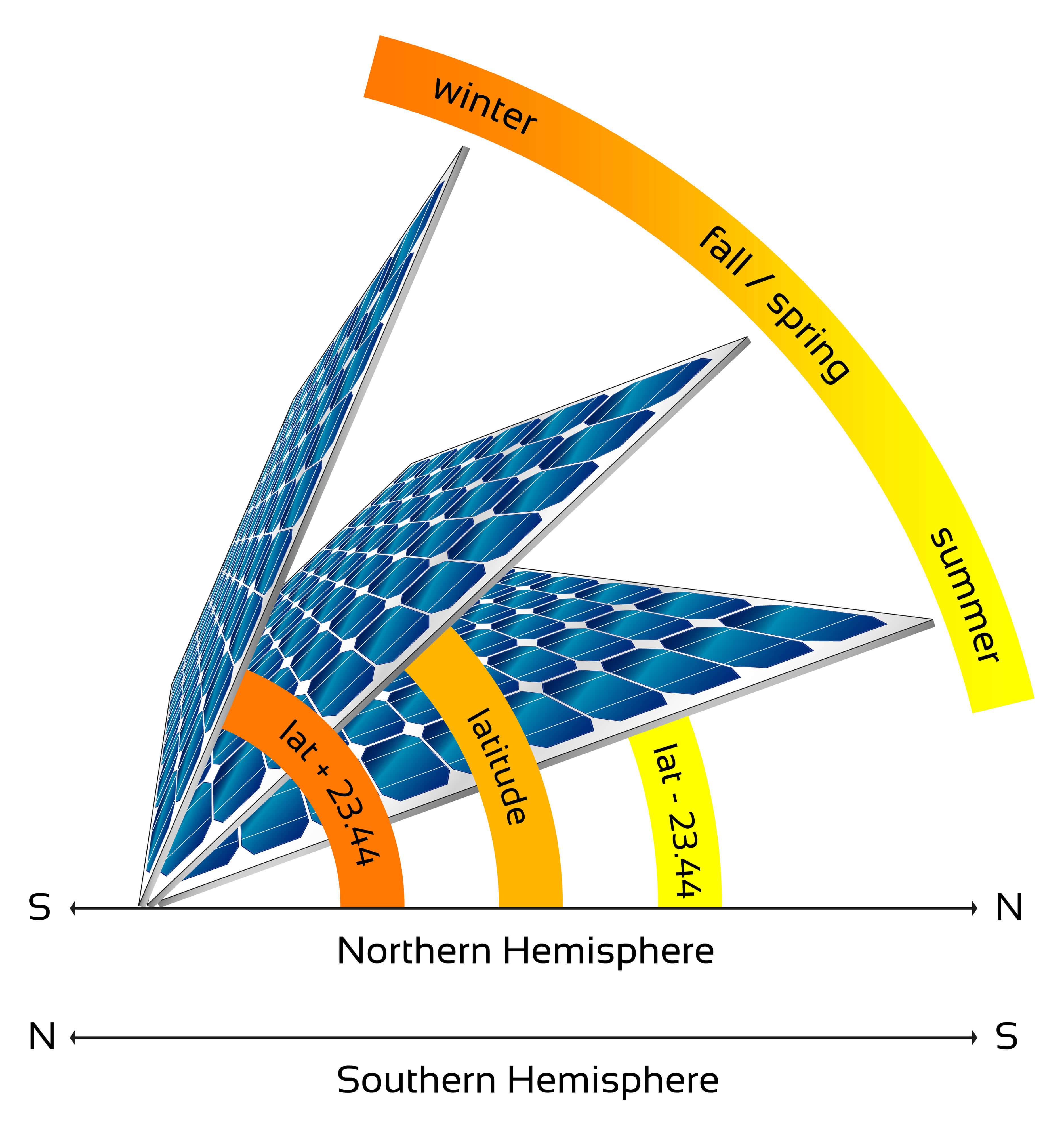
Solar panels are devices that convert sunlight into electrical energy. To optimize the output of solar panels, it is important to consider the tilt angle at which the panels are installed. The tilt angle of solar panels refers to the angle at which the panels are mounted relative to the horizontal plane. The tilt angle of solar panels is significant because it affects the amount of sunlight that the panels receive and, consequently, the amount of electrical energy that they produce. When a solar panel is installed, it should be oriented and tilted to receive maximum sunlight throughout the year.
If the tilt angle is not considered before installation, the solar panel may receive less sunlight and therefore produce less power. This is because the optimal tilt angle for a solar panel depends on the latitude of the installation location and the season. A solar panel that is installed at an angle that is too steep or too shallow for the specific location may not produce as much power as it could.
In Kerala, India, which is located close to the equator, with a latitude ranging from 8.5241° N to 12.4966° N, which means that the angle of the sun's rays is relatively constant throughout the year.
In general, the optimal tilt angle for solar panels in Kerala is between 10 and 15 degrees, as this angle allows the panels to capture the maximum amount of sunlight throughout the year. This is because Kerala is a tropical region, which means that the sun is almost directly overhead during the summer months, and the angle of the sun's rays is relatively high throughout the year. By tilting the solar panels at a low angle, they can capture more sunlight during the year.
However, the optimal tilt angle for solar panels in Kerala can also vary depending on the season. During the winter months, the sun is lower in the sky, and the optimal tilt angle for solar panels in Kerala would be slightly higher, between 15 and 20 degrees. Conversely, during the summer months, when the sun is almost directly overhead, the optimal tilt angle for solar panels in Kerala would be slightly lower, between 10 and 15 degrees.
To calculate the optimal tilt angle for a solar panel in Kerala, we can use the following formula:
Optimal tilt angle = Latitude of location + 15 degrees (for winter) or -15 degrees (for summer)
The latitude of Kerala is approximately 8.5 degrees North. Using this formula, we can calculate the optimal tilt angle for a solar panel in Kerala as follows:
Winter (December solstice):
Optimal tilt angle = 8.5 + 15 = 23.5 degrees
Summer (June solstice):
Optimal tilt angle = 8.5 - 15 = -6.5 degrees
As you can see, the optimal tilt angle of a solar panel in Kerala varies throughout the year. The tilt angle should be adjusted twice a year to ensure that the solar panel is angled optimally to receive the most sunlight.
Another factor to consider when determining the optimal tilt angle for solar panels in Kerala is the type of solar panel being used. Polycrystalline and monocrystalline solar panels are most efficient when they are mounted at a tilt angle between 10 and 15 degrees, which is the same as the optimal tilt angle for the region. Thin-film solar panels, on the other hand, are more efficient when they are mounted at a slightly lower tilt angle of between 5 and 10 degrees.
In addition to the tilt angle, other factors that can affect the energy output of solar panel installations in Kerala include shading, weather conditions, and the orientation of the panels. To maximize the energy output of solar panel installations in Kerala, it is important to ensure that the panels are not shaded by trees or other buildings, and that they are facing in the optimal direction. In Kerala, solar panels should ideally face towards the south or southeast to capture the maximum amount of sunlight throughout the year.