Off-grid, On-Grid, and Hybrid Inverters: What They Are and How They Differ
07 February 2023
Off-grid, on-grid, and hybrid inverters are three types of inverters used in solar power systems. Each type of inverter is designed to meet different needs and requirements.
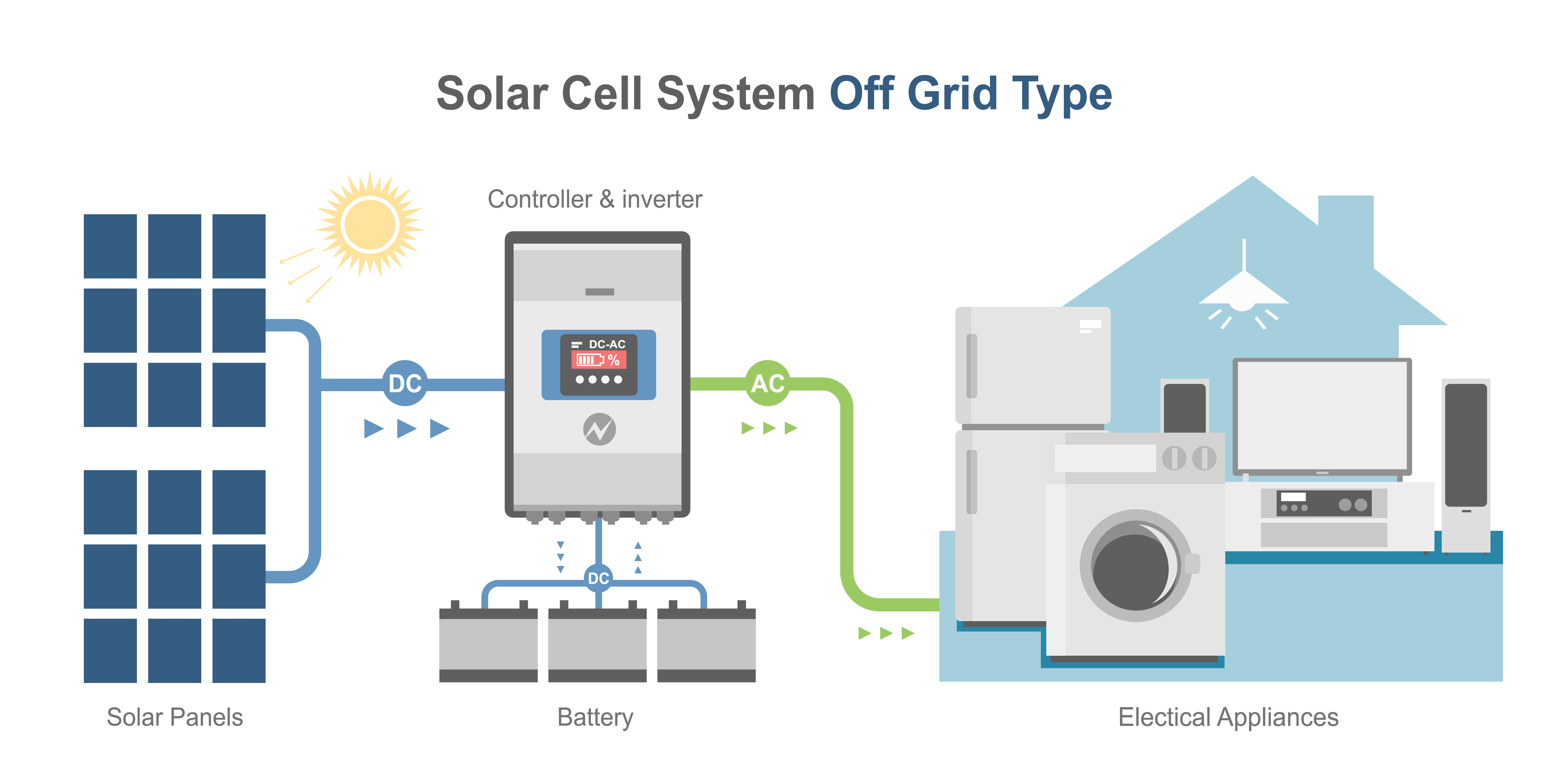
Off-grid Inverter
An off-grid inverter is used in a solar power system that is not connected to the grid. It is also known as a standalone inverter. The off-grid inverter is responsible for converting the direct current (DC) power generated by the solar panels into usable alternating current (AC) power for your home appliances. The off-grid inverter is also responsible for managing the charging and discharging of the battery bank, which is used to store excess energy generated by the solar panels.
Off-grid inverters are typically used in remote areas where there is no access to the grid. They are also used in applications where there is a need for backup power in case of grid failures. Off-grid inverters are usually larger in size than on-grid inverters and are designed to handle a wide range of loads and battery capacities.
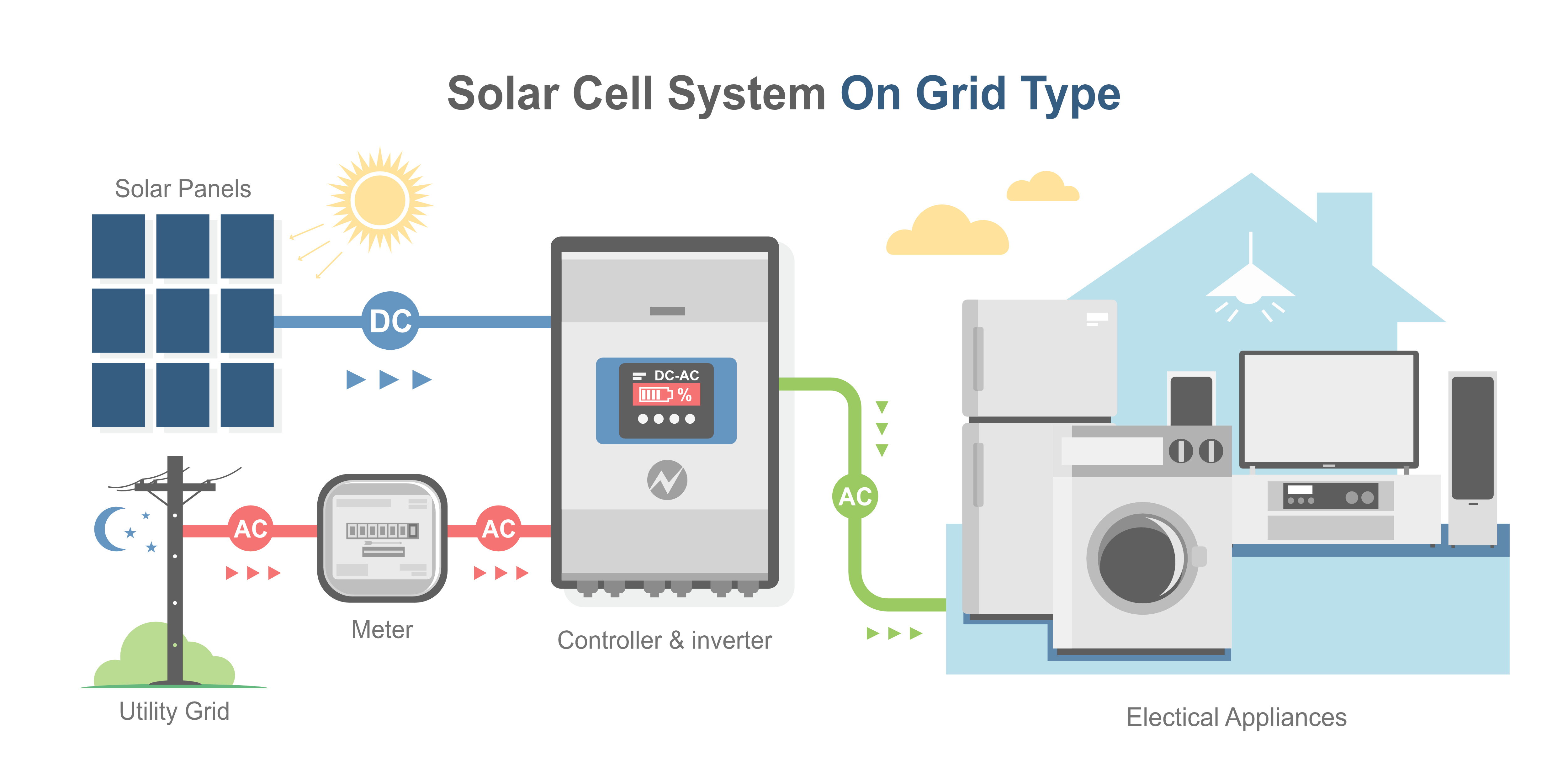
On-grid Inverter
An on-grid inverter, also known as a grid-tied inverter, is used in a solar power system that is connected to the grid. The on-grid inverter is responsible for converting the DC power generated by the solar panels into AC power that can be used in your home appliances. It is also responsible for synchronizing the frequency and voltage of the power generated by the solar panels with the grid.
On-grid inverters do not have a battery bank and do not provide backup power in case of grid failures. They are designed to feed excess power generated by the solar panels back into the grid. In some cases, the excess power generated by the solar panels can be sold back to the grid, depending on local regulations.
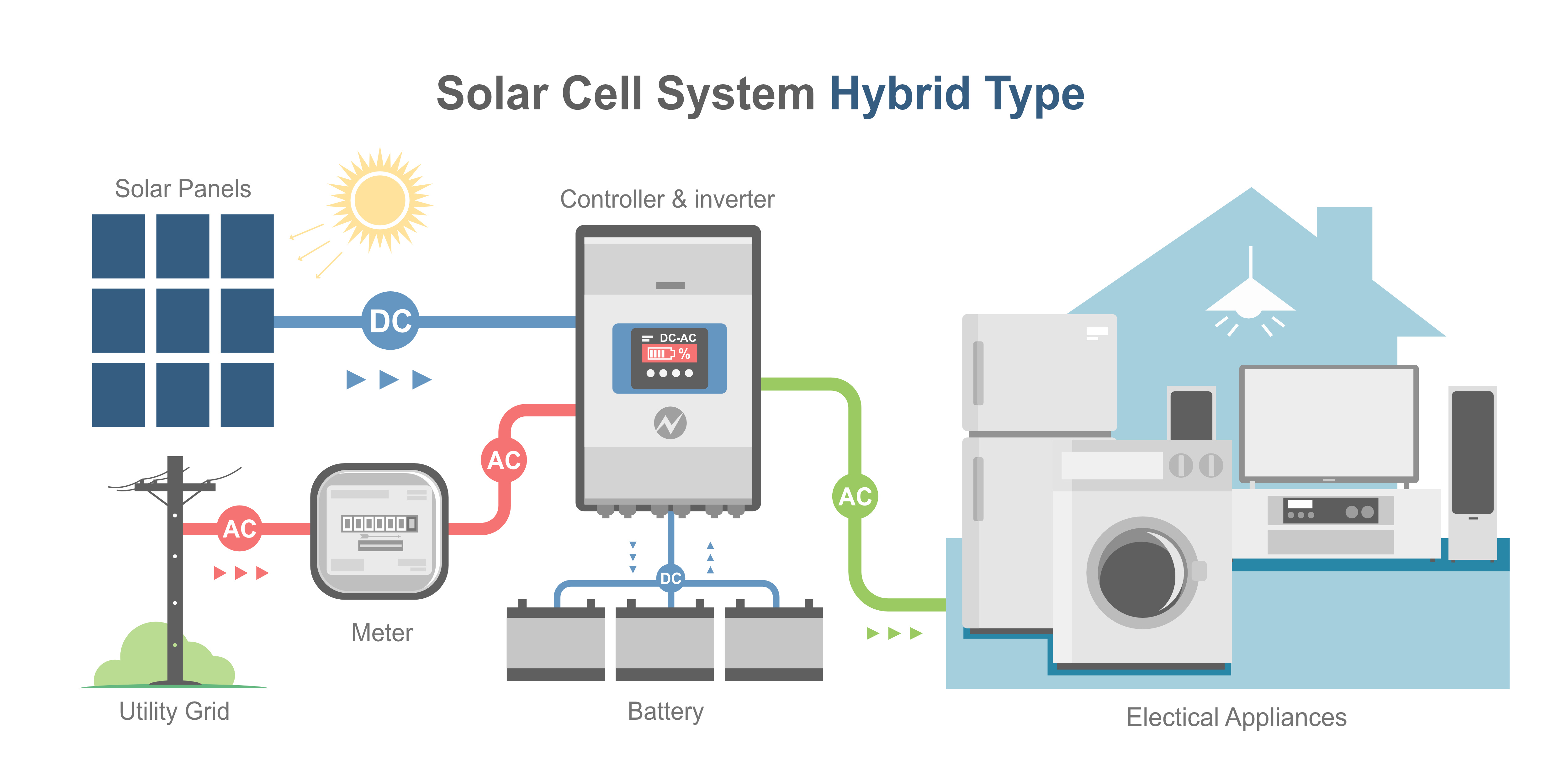
Hybrid Inverter
A hybrid inverter is a combination of an on-grid and off-grid inverter. It is used in a solar power system that is connected to the grid but also has a battery bank for backup power in case of grid failures. The hybrid inverter is responsible for converting the DC power generated by the solar panels into AC power for your home appliances. It also manages the charging and discharging of the battery bank and can switch between on-grid and off-grid modes depending on the availability of power.
Hybrid inverters are ideal for areas with unreliable grid power or for homeowners who want to have backup power in case of grid failures. They are also useful for homeowners who want to take advantage of the benefits of on-grid solar power while still having the option for off-grid backup power.